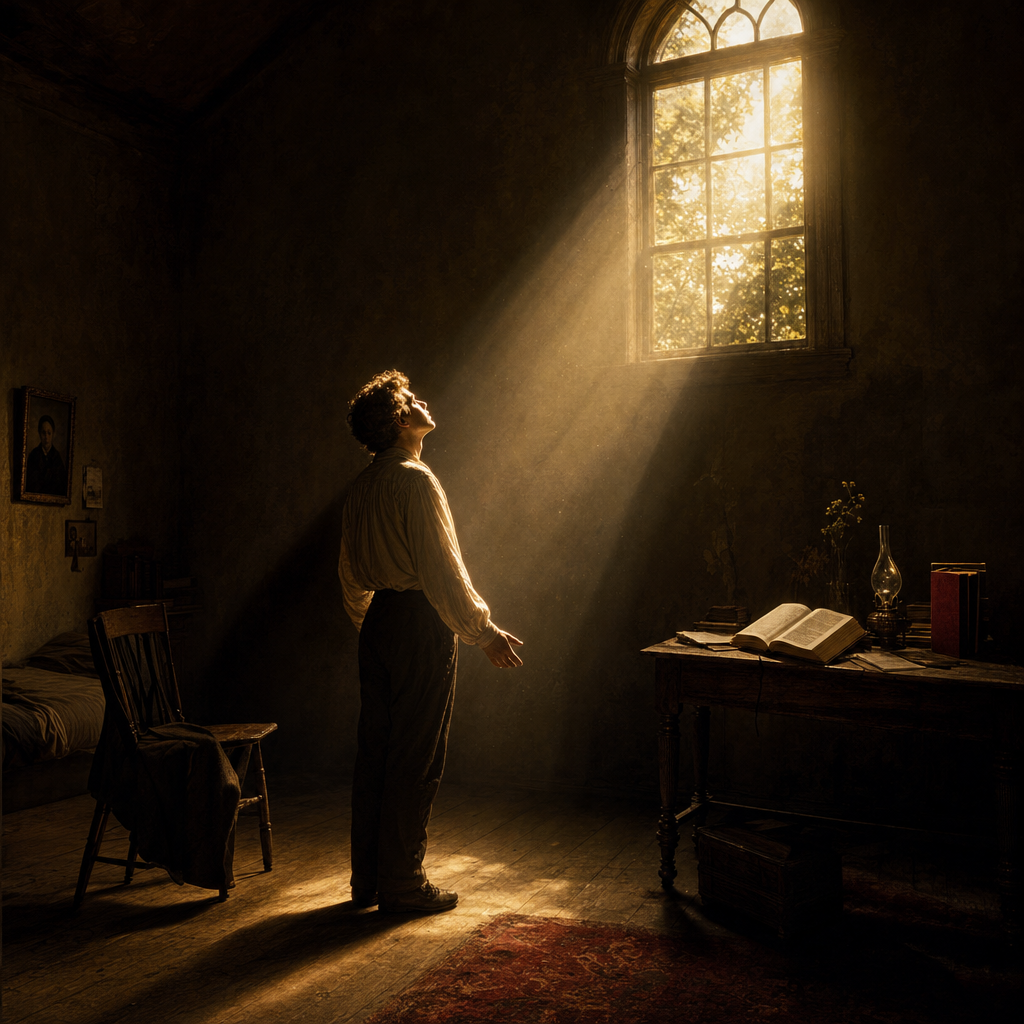
The Varieties of Religious Experience: A Study in Human Nature gathers James's twenty Gifford Lectures delivered at Edinburgh in 1901–2, the most comprehensive empirical study of religion ever written by a philosopher. Refusing to begin with definitions or institutional forms, James goes straight to the raw material: the testimonies of individuals undergoing conversion, mystical states, saintliness, and the experience of the divine. He draws on letters, diaries, autobiographies, and case studies to argue that religious experience is a genuine and irreducible feature of human life, one that produces real effects — serenity, charity, new energy — regardless of its ultimate metaphysical source. Against both dogmatic religion and crude medical materialism, James argues that the fruits of religious life, judged empirically, give us the best evidence we have for "something more" beyond the ordinary field of consciousness. The Varieties remains the foundational text of the psychology of religion and one of the great monuments of American philosophy.
14 chapters · Public domain
1
Lecture I — Religion and Neurology
~35 min · 17 pages
›2
Lecture II — Circumscription of the Topic
~42 min · 21 pages
›3
Lecture III — The Reality of the Unseen
~42 min · 20 pages
›4
Lectures IV and V — The Religion of Healthy-Mindedness
~74 min · 36 pages
›5
Lectures VI and VII — The Sick Soul
~60 min · 31 pages
›6
Lecture VIII — The Divided Self, and the Process of Its Unification
~35 min · 16 pages
›7
Lecture IX — Conversion
~42 min · 21 pages
›8
Lecture X — Conversion (Concluded)
~66 min · 32 pages
›9
Lectures XI, XII, and XIII — Saintliness
~105 min · 49 pages
›10
Lectures XIV and XV — The Value of Saintliness
~74 min · 35 pages
›11
Lectures XVI and XVII — Mysticism
~68 min · 32 pages
›12
Lecture XVIII — Philosophy
~39 min · 19 pages
›13
Lecture XIX — Other Characteristics
~39 min · 18 pages
›14
Lecture XX — Conclusions
~38 min · 18 pages
›More by William James