Nature and Its Dim Vision
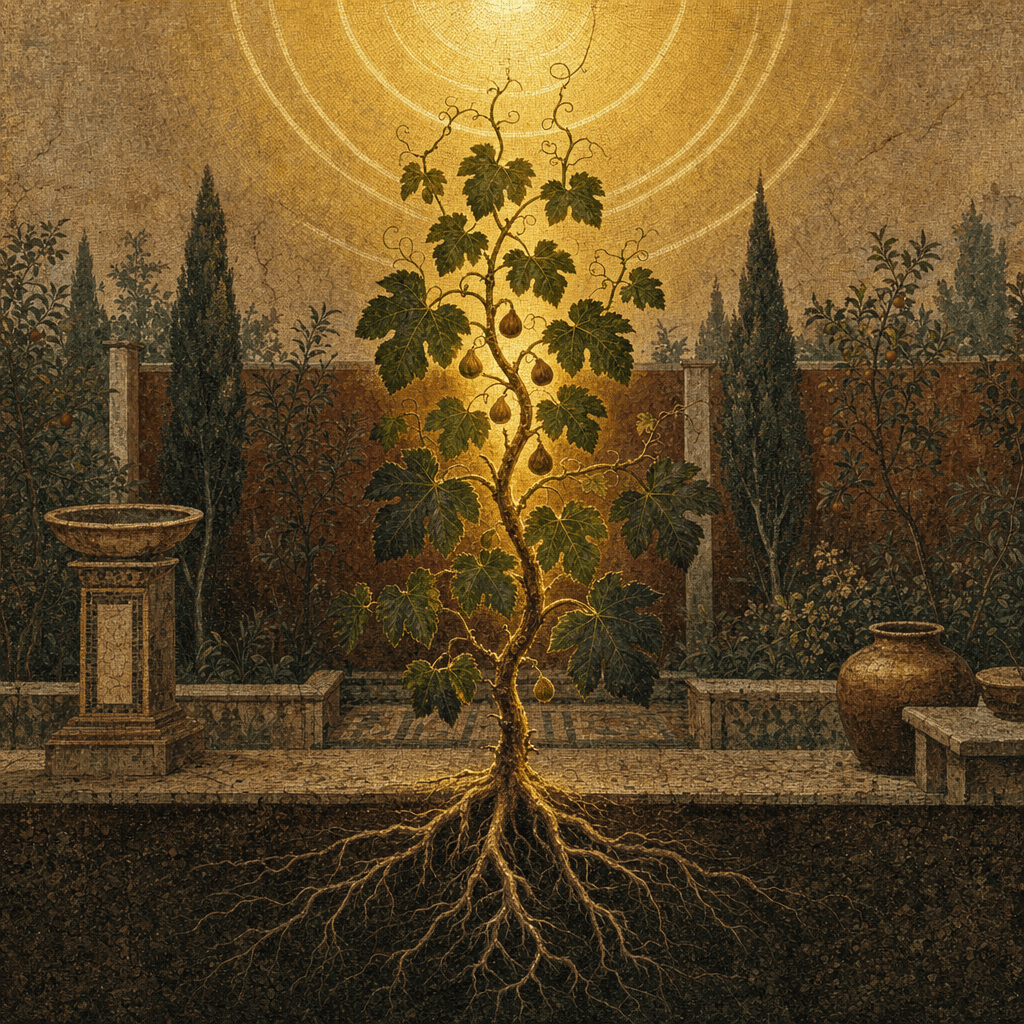
Nature — the principle responsible for generating and sustaining physical organisms — does not know what it does. It does not deliberate or plan; it produces as a dreamer produces dream images, without full awareness. Yet this production, Plotinus argues, is still a form of contemplation: it is the activity of a soul-like principle whose "vision", however dim, is directed toward the Forms it is trying to instantiate in matter. When a plant grows toward the light, when an animal's instinct drives it precisely toward what will sustain its life, these activities are not mechanical — they express a "seeing" that operates below the threshold of consciousness but still partakes in the intelligible order that conscious contemplation grasps more clearly.
The Hierarchy of Contemplation
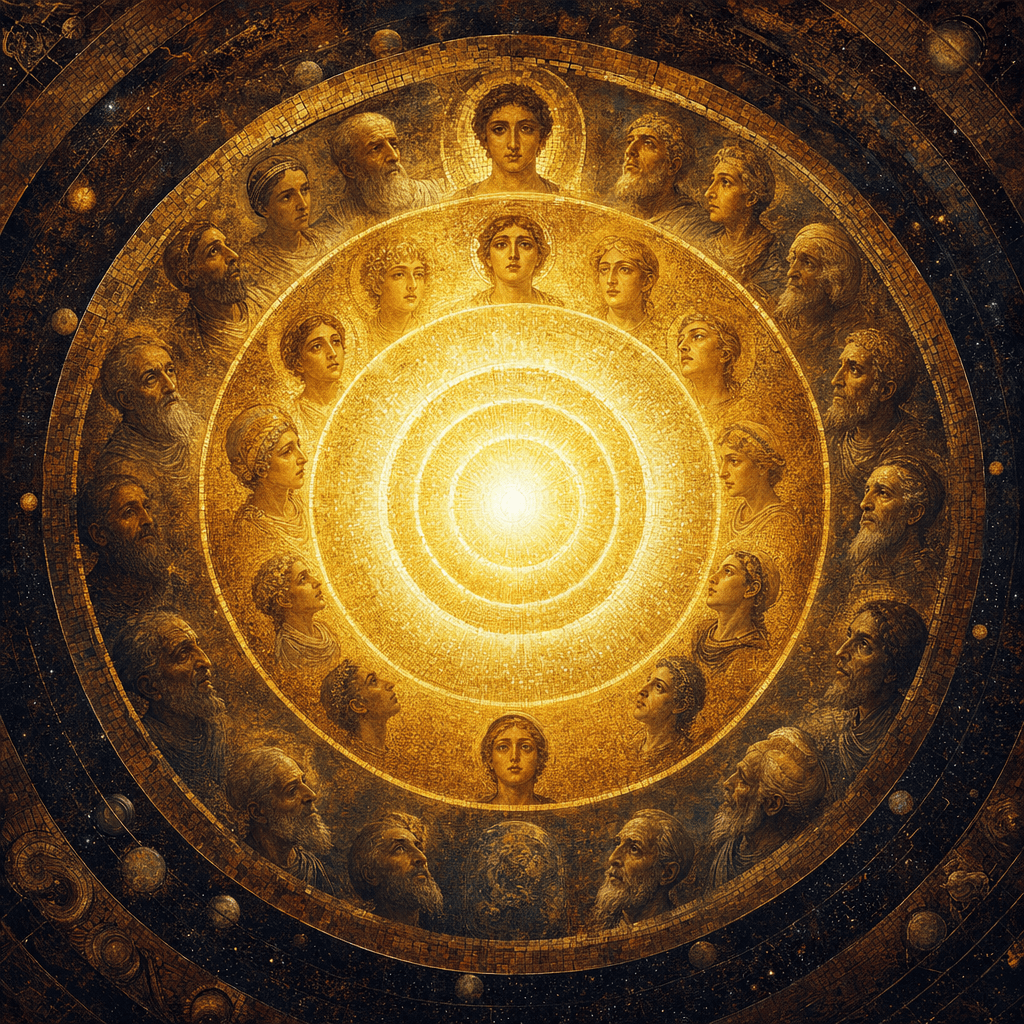
Plotinus arranges all reality in a hierarchy of contemplative clarity. At the base: matter and the most vegetative natural processes, whose "contemplation" is barely distinguishable from pure passivity. Above this: the animal soul, whose desires and perceptions represent a livelier, more self-directed participation in intelligible reality. Above this: rational human souls, capable of genuine philosophical reflection and the disciplined ascent toward Intellect. Above this: the World Soul itself, contemplating Intellect with a clarity that far exceeds anything available to embodied humans. And above the World Soul: Intellect, whose contemplation is the pure thinking-thinking-itself that constitutes the realm of Forms. Each level is defined by how much of the intelligible it can hold in view.
Action as Weakened Contemplation
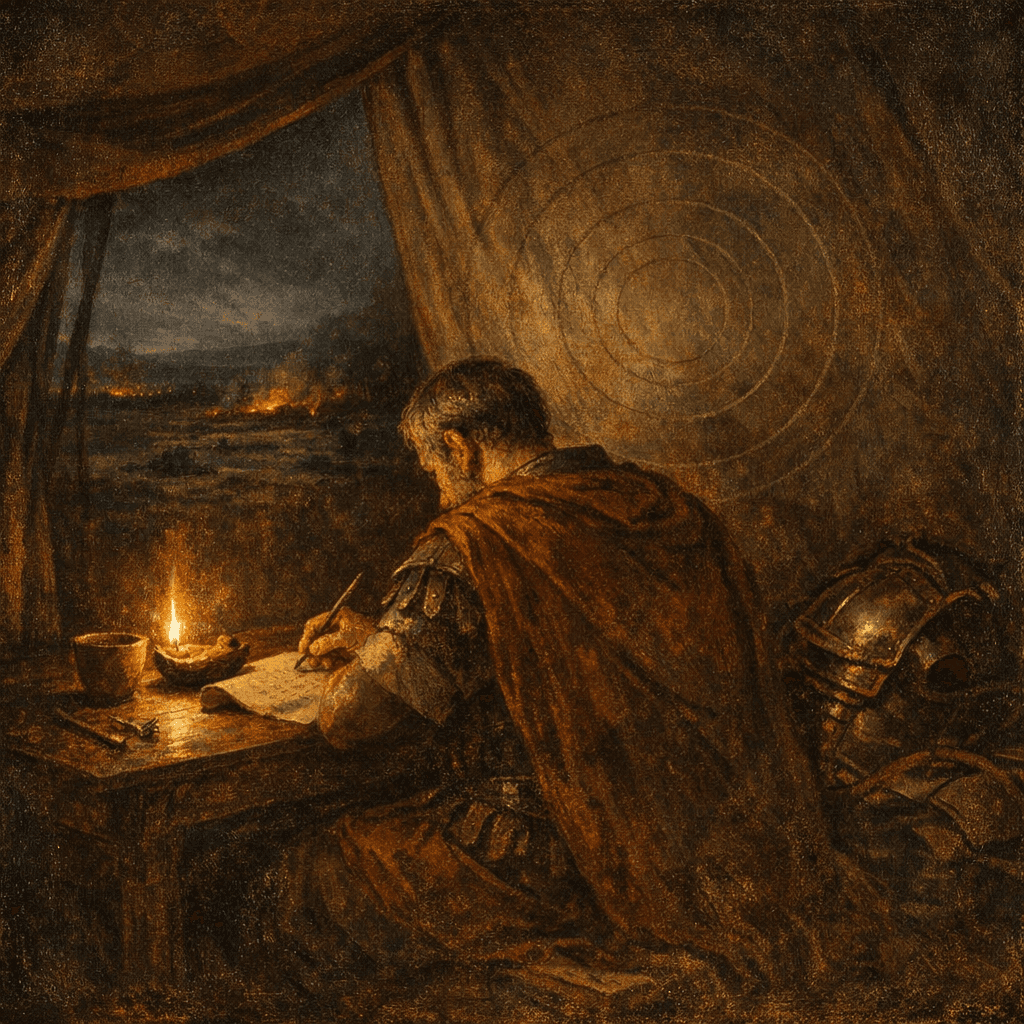
Why do beings act rather than purely contemplate? Because their contemplative power is insufficient to hold the intelligible fully within. The person who cannot sustain the vision of the beautiful in their mind makes a statue; the legislator who cannot sustain the vision of justice makes laws. Making is what contemplation looks like when the vision cannot remain purely internal. This reverses the ordinary assumption that action is more powerful and effective than contemplation. For Plotinus, the most powerful beings are those that do the least — the One produces everything while doing nothing at all. The closer to pure contemplation a being is, the fuller its reality; the more it must act outwardly, the more it has lost of its inward vision.
The argument that all things contemplate opens Ennead III.8. The treatise proceeds from nature's dim contemplation through soul and intellect to the One's self-sufficient rest — a miniature summary of the entire Plotinian system. Gilles Deleuze famously engaged with this treatise in Difference and Repetition.
Related Concepts