Death as Ownmost Possibility
Death is not a property that other people have died and that I might eventually acquire; it is the possibility that is always already mine and that I cannot delegate to anyone else. No one can die my death for me. This ownmost, non-relational, certain, and indefinite-as-to-when possibility is always operative as a structure of my existence — not as a morbid fixation but as the horizon against which all other possibilities take on their significance. Heidegger argues that it is this possibility alone that individualises Dasein absolutely, since every other possibility can be shared or substituted.
Fleeing Death in the They-Self
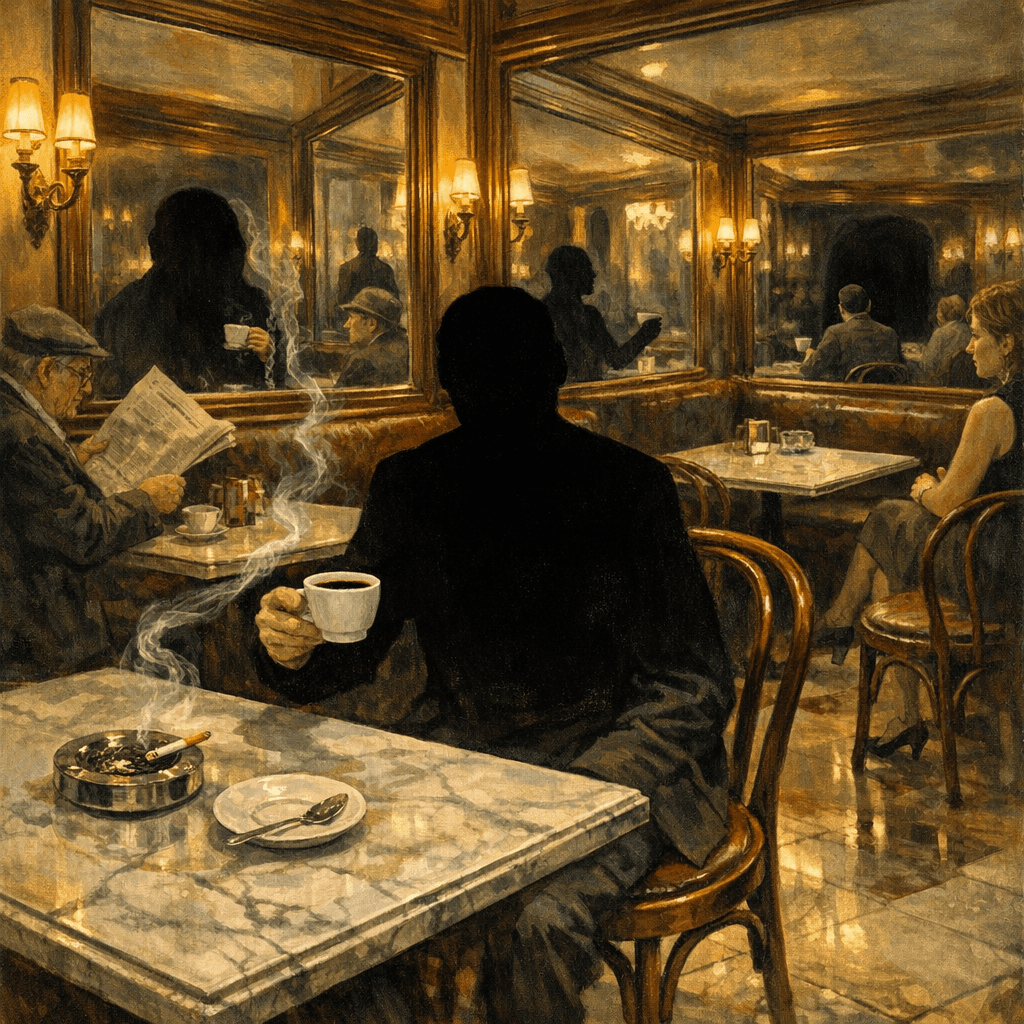
Das Man — the anonymous "one" of everyday public existence — has its characteristic way of dealing with death: by talking about it as something that happens, as an event that others undergo, as a statistic or a regrettable inevitability that need not be dwelt upon. "One dies, but not yet, and not right now." This tranquillisation before the abyss is the mode of inauthenticity before death: covering over the ownmost possibility by dissolving it into the impersonal. Authentic being-toward-death does not mean wallowing in mortality but refusing to let this evasion succeed.
Resoluteness and Finitude
Anticipating one's death — running ahead into it — does not produce despair but clarification. Death as the uttermost possibility that cannot be outrun functions as the horizon that makes time itself visible as finite and precious. Resolute Dasein, owning its thrownness in light of its mortality, gains what Heidegger calls authentic temporality: not an extension toward an indefinite future but the intense appropriation of its own situated possibilities in the time that is genuinely available to it. Finitude is not a deficiency but the condition of every genuine choice.
Being-toward-death is the centrepiece of Division Two of Being and Time (1927), analysed in §§46–53. The chapter on authentic being-toward-death and its relationship to resoluteness and temporality (§§54–60) is among the most commented passages in twentieth-century philosophy.
Related Concepts