The Architecture of Human Society
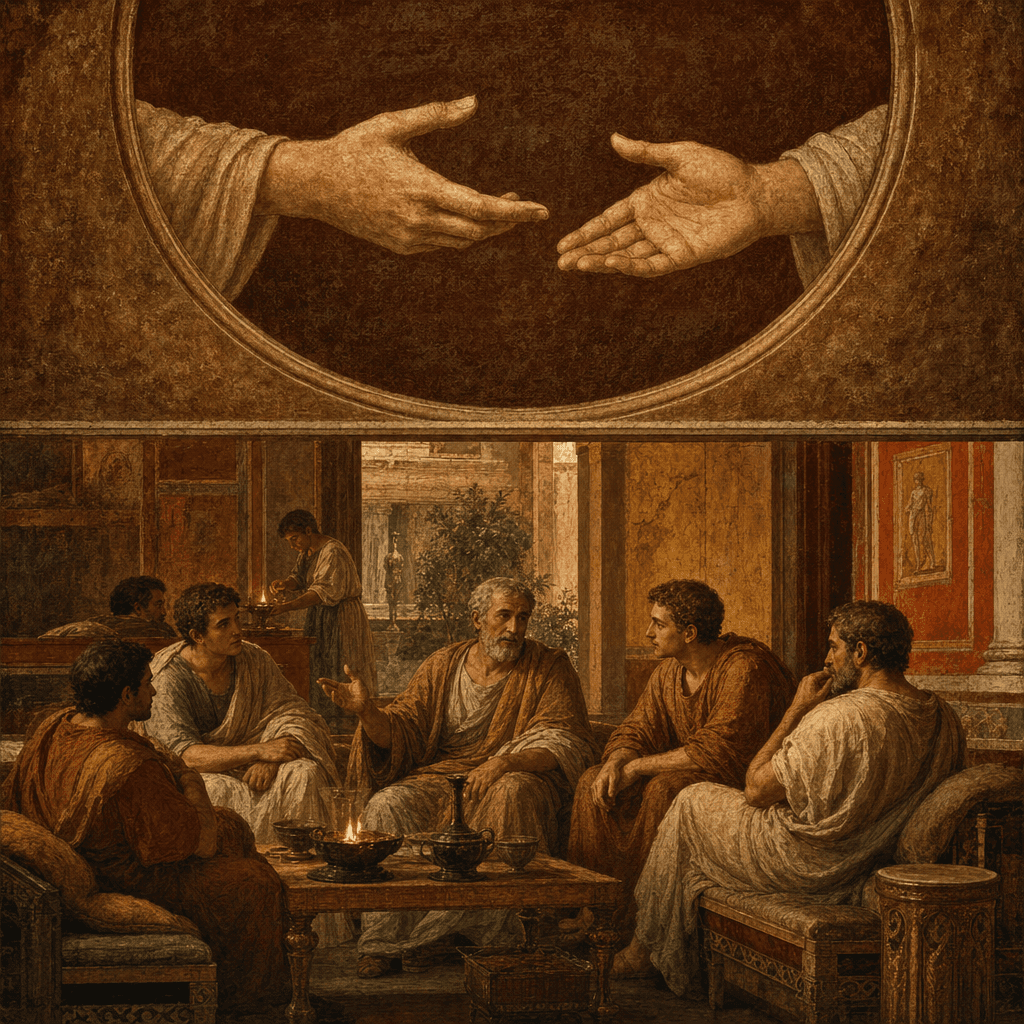
Seneca opens his treatise by identifying the root of much human misery: not poverty, not illness, but the universal ignorance about benefits — what they are, how to give them, and how to receive them rightly. The whole business of mankind in society, he observes, falls under this head. Kings and subjects, parents and children, friends and strangers are all bound together, for better or worse, by the exchange of good offices.
He that does good to another man does good also to himself; not only in the consequence, but in the very act of doing it; for the conscience of well-doing is an ample reward.
The Three Kinds of Benefit
Seneca distinguishes benefits that are necessary (those without which we cannot live), those without which we ought not to live — preserving liberty, modesty, and a clear conscience — and those which custom and affection have made dear to us: family, friendship, country. These gradations are not merely descriptive. They establish a hierarchy of obligation that guides the wise giver in every decision about what to bestow and upon whom.
Giving Without Law or Force
One of Seneca's sharpest arguments concerns the impossibility of legislating gratitude. Unlike money debts, which can be enforced by bond and seal, the obligation born of a genuine benefit rests only in the conscience. To try to legalise it would be to destroy its nature: a benefit extracted by force is no benefit at all. The social bond created by free giving is therefore more fragile and more exalted than any legal contract.
The argument of On Benefits draws on Stoic natural law and Cicero's De Officiis, developing the Stoic claim that human beings are naturally sociable creatures who can only flourish in community.
Related Concepts