The Symmetry Argument
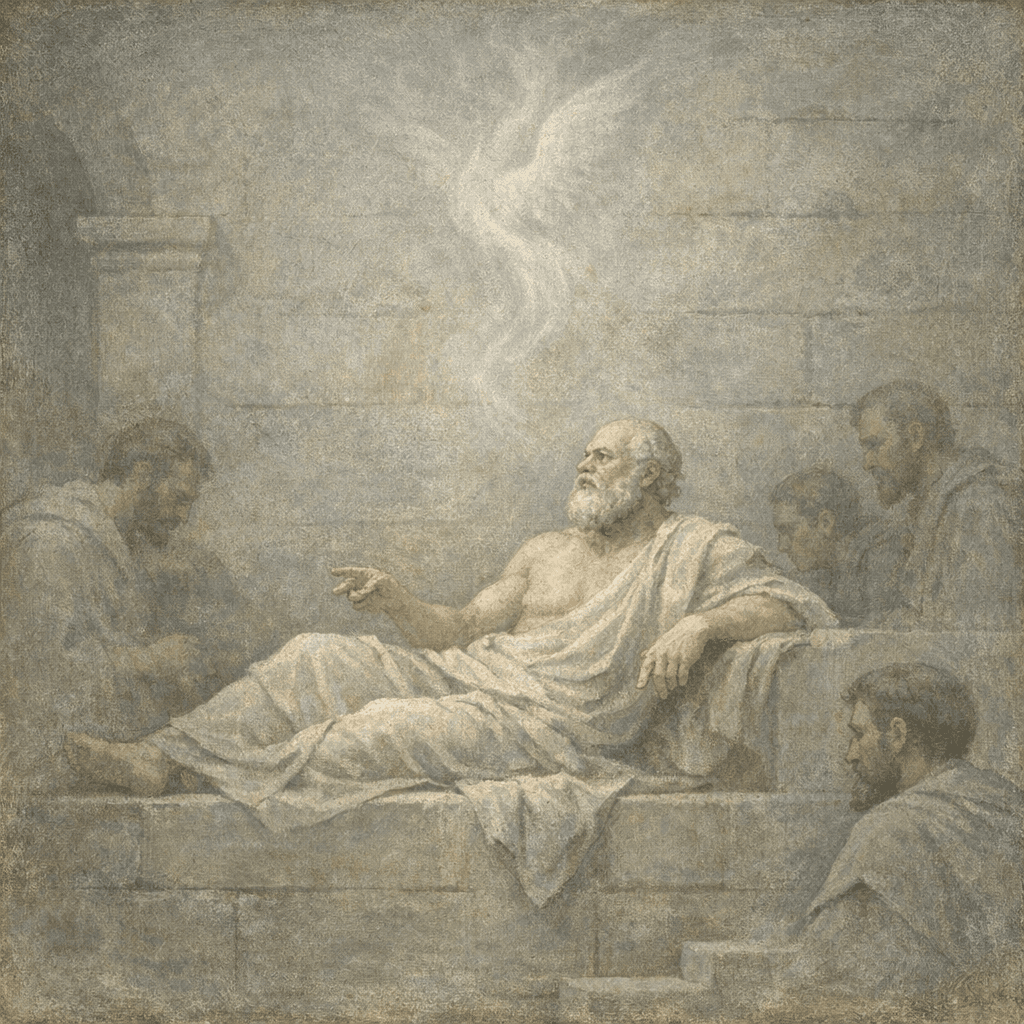
Epicurus's argument is precise. All good and evil, he holds, consist in sensation. Death is the complete cessation of sensation. Therefore, when death is present, we are not; when we are present, death is not. The two can never be simultaneous, so death can never be experienced as a harm. To fear death is to fear something one will never encounter. This "deprivation argument" — that the dead are not there to be deprived of life — is one of the most discussed arguments in philosophy, and its logic is harder to refute than it may first appear.
The Symmetry of Pre-natal Non-existence
Epicurus reinforces the argument with an analogy to the time before birth. No one is troubled by the eternity of non-existence that preceded their life. Why, then, should the eternity of non-existence that follows it be terrifying? If the blank before birth holds no horror, the blank after death should be equally indifferent. This "symmetry argument" — later developed and challenged by Lucretius and by modern philosophers — invites us to examine whether our dread of death is a coherent response or a confusion generated by imagining our own absence as if we were still present to experience it.
The Freedom This Gives
The practical consequence of accepting that death is nothing to us is enormous. Once the fear of death is removed, an entire dimension of anxiety — about when one will die, how one will die, what happens after — simply stops generating suffering. Life is no longer shadowed by its terminus. The Epicurean can engage fully in the pleasures of friendship, philosophy, and the present moment without the pervasive background dread that otherwise colours human experience. To understand death correctly is, paradoxically, to be freed for life.
The argument appears in the Letter to Menoeceus and is also the subject of Lucretius's De Rerum Natura, Book III, where the symmetry argument is most elaborately developed. The deprivation objection — that the dead are harmed by being deprived of future good — is articulated by Thomas Nagel in "Death" (1970), the most influential modern response to the Epicurean position.
Related Concepts