Against Credulity
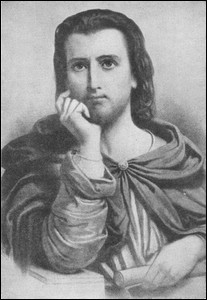
Abelard distinguishes between faith as trustworthy conviction grounded in rational enquiry and faith as unreflective credulity — the mere repetition of what one has been told. Both may produce outwardly identical behaviour, but only the first is spiritually genuine. A person who believes in the Trinity because they were told to, without any understanding of what the doctrine means, has not really grasped the object of their belief. Abelard's theology is a sustained attempt to move believers from the second kind of faith to the first.
Dialectic as Theological Discipline
The tool Abelard employs is dialectic — the art of clarifying concepts, exposing contradictions, and following arguments to their conclusions. Applied to theology, this means asking what "Father," "Son," and "Spirit" actually refer to; what it means to say that three persons share one substance; how omnipotence is compatible with the existence of evil. These are not attacks on Christian doctrine but attempts to understand what Christian doctrine is claiming. Abelard believes the doctrine can withstand the scrutiny; his critics disagreed about whether subjecting it to scrutiny was appropriate.
The Boundaries of Reason
Abelard is not a rationalist who believes reason can replace revelation. He acknowledges that the Trinity is a mystery — something that could not have been discovered by unaided reason — and that revelation is its proper source. What reason can do is clarify, defend, and explore the implications of what has been revealed. It can show that the doctrine is not self-contradictory, that it coheres with other things we know, and that its conceptual structure is intelligible. This is a more modest claim than his enemies granted him, but a more ambitious one than his defenders sometimes acknowledged.
Abelard's theological method was shaped by his reading of Boethius — whose theological tractates model the application of logical analysis to Christian doctrine — as well as by his immersion in the new Aristotelian logic available in the Latin West in the early twelfth century.
Related Concepts