Cosmology and Moral Philosophy United
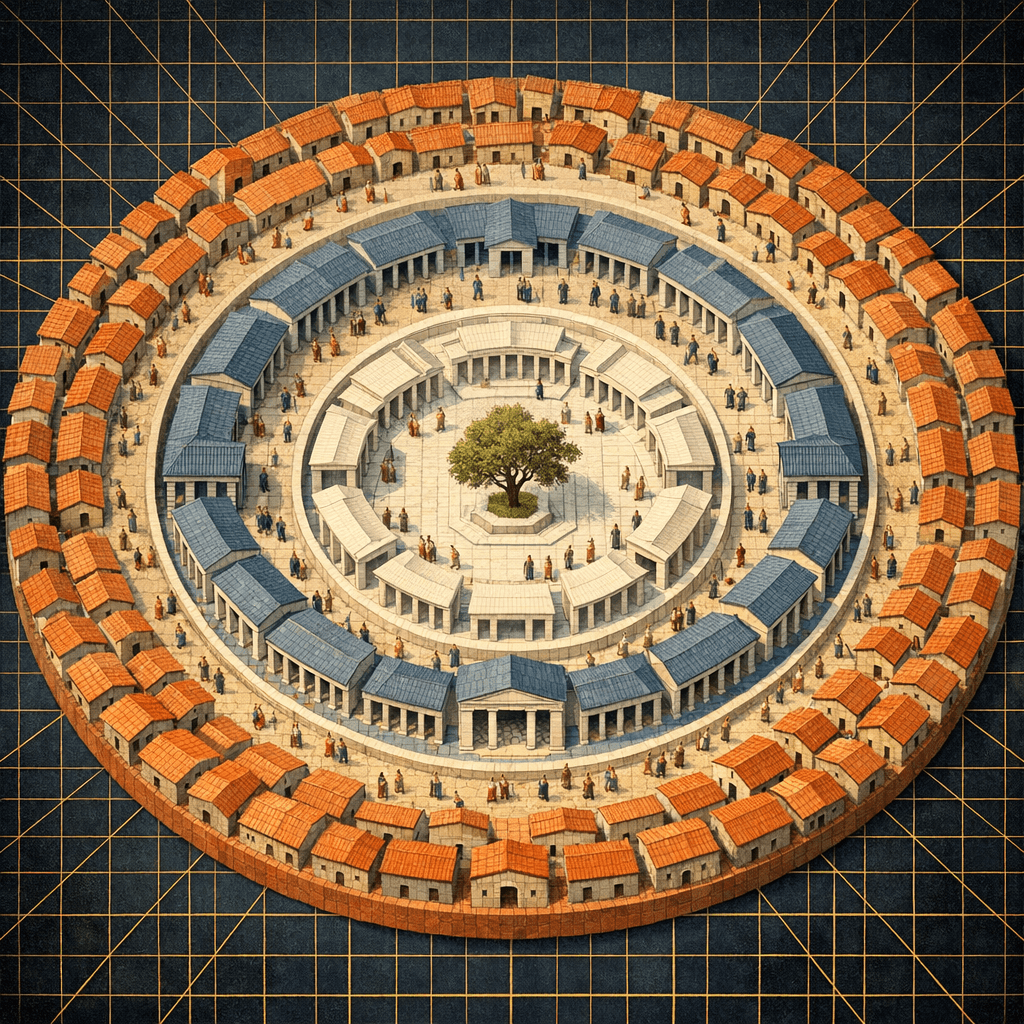
For Yi Hwang, the Supreme Ultimate diagram is not merely cosmological decoration but the foundation of moral cultivation. The Taiji is identical with li (principle or reason), the underlying normative pattern of all reality. When heaven generates humanity, it bestows the li of the Supreme Ultimate as the human moral nature — the Four Virtues of humanity (ren), righteousness (yi), ritual propriety (li), and wisdom (zhi). To cultivate moral virtue is therefore to realise in oneself the same principle that organises the cosmos. Ethics and metaphysics are not separate disciplines but the same inquiry pursued at different levels.
Yi Hwang's Emendations
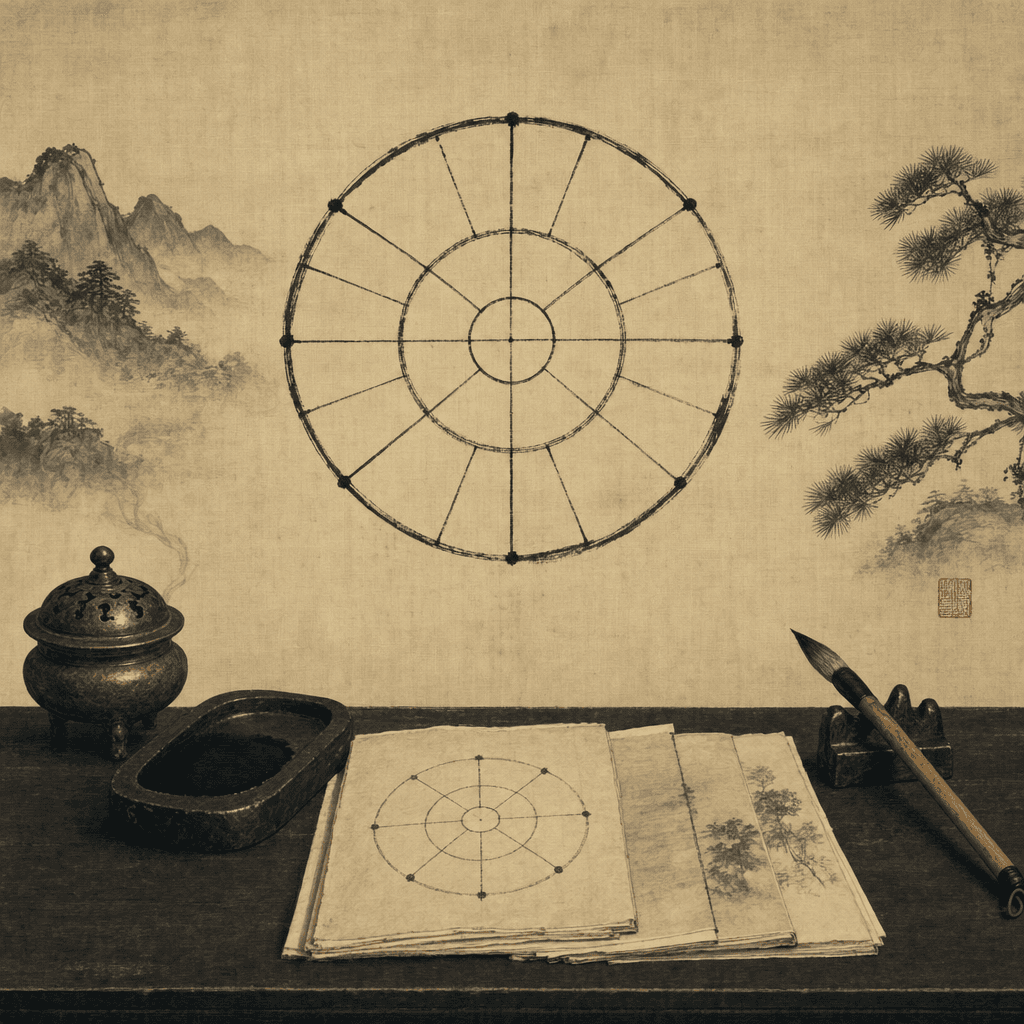
Yi Hwang did not merely transcribe Zhou Dunyi's diagram — he offered careful emendations to an earlier Korean version of the diagram by Kwŏn Kŭn, correcting what he saw as a misrepresentation of the relationship between the Supreme Ultimate and yin-yang. The debate was subtle but consequential: it concerned whether the Taiji stands wholly apart from yin-yang as their source, or whether it is present within them as their principle. Yi Hwang took the latter view, drawing on Zhu Xi's commentary: the Taiji is not a separate entity above or before yin-yang but the principle inherent in their alternation and development.
Diagram as Pedagogical Tool
The use of a diagram rather than a discursive argument is characteristic of Yi Hwang's method throughout the Ten Diagrams. A diagram can present simultaneously what prose must present sequentially; it makes relationships visible at a glance rather than building them through argument. Yi Hwang believed that the ten diagrams could anchor the mind in the essential structures of Neo-Confucian teaching, providing a visual framework within which the practitioner could organise all subsequent study and self-cultivation. The diagram is a map of reality and a map of the self — the same map.
The Supreme Ultimate diagram is the first of the Ten Diagrams on Sage Learning (1568), adapted from Zhou Dunyi's Taijitu shuo (Explanation of the Diagram of the Supreme Ultimate, c. 1050). Yi Hwang's emendations are discussed in detail in Michael Kalton's translation and commentary, To Become a Sage (1988).
Related Concepts