Laws Must Be Explained Too
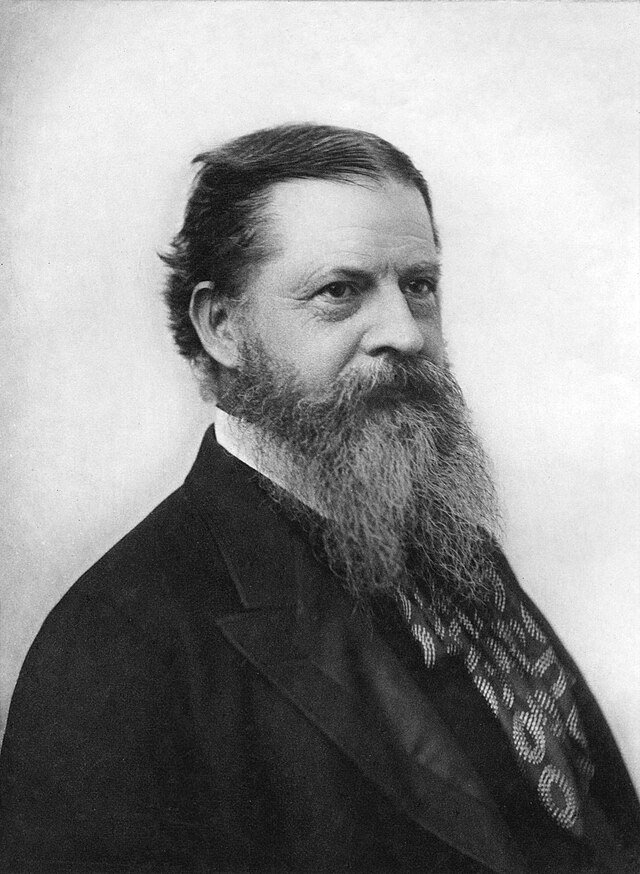
The necessitarian takes the uniformity of nature as a first principle needing no account. Peirce turns the demand around: regularity is precisely the thing a philosophy must explain, and the only explanation that does not simply restate the mystery is that laws are outcomes — habits nature has acquired, results of an evolution that is still going on. But whatever evolves from less order to more must contain a residue of disorder still.
Now the only possible way of accounting for the laws of nature and for uniformity in general is to suppose them results of evolution. This supposes them not to be absolute, not to be obeyed precisely. It makes an element of indeterminacy, spontaneity, or absolute chance in nature.
The Ancient Precedent
Peirce is careful to show the doctrine’s pedigree. Democritus made mechanical necessity the sole principle of things; Epicurus, revising the atomic theory, was forced to let atoms swerve. Aristotle held that events come about by external compulsion, by inward nature, and sometimes by absolute chance — a triple classification Peirce calls the inmost essence of Aristotelianism. Strict necessitarianism was the position of one ancient school only: the Stoa.
But Epicurus, in revising the atomic doctrine and repairing its defences, found himself obliged to suppose that atoms swerve from their courses by spontaneous chance; and thereby he conferred upon the theory life and entelechy.
What Chance Buys
Tychism is not a mere concession to imprecision. Chance is what makes growth, variety, and feeling possible in a universe that would otherwise be a completed machine. Exact measurement never confirms exact law — observation always leaves a margin — and inside that margin Peirce places the spontaneity from which habits, minds, and the laws of physics themselves have crystallized.
Drawn from “The Architecture of Theories” and “The Doctrine of Necessity Examined,” The Monist, 1891–92 (Part II of Chance, Love, and Logic).
Related Concepts