Closure as the Mark of the Demonic
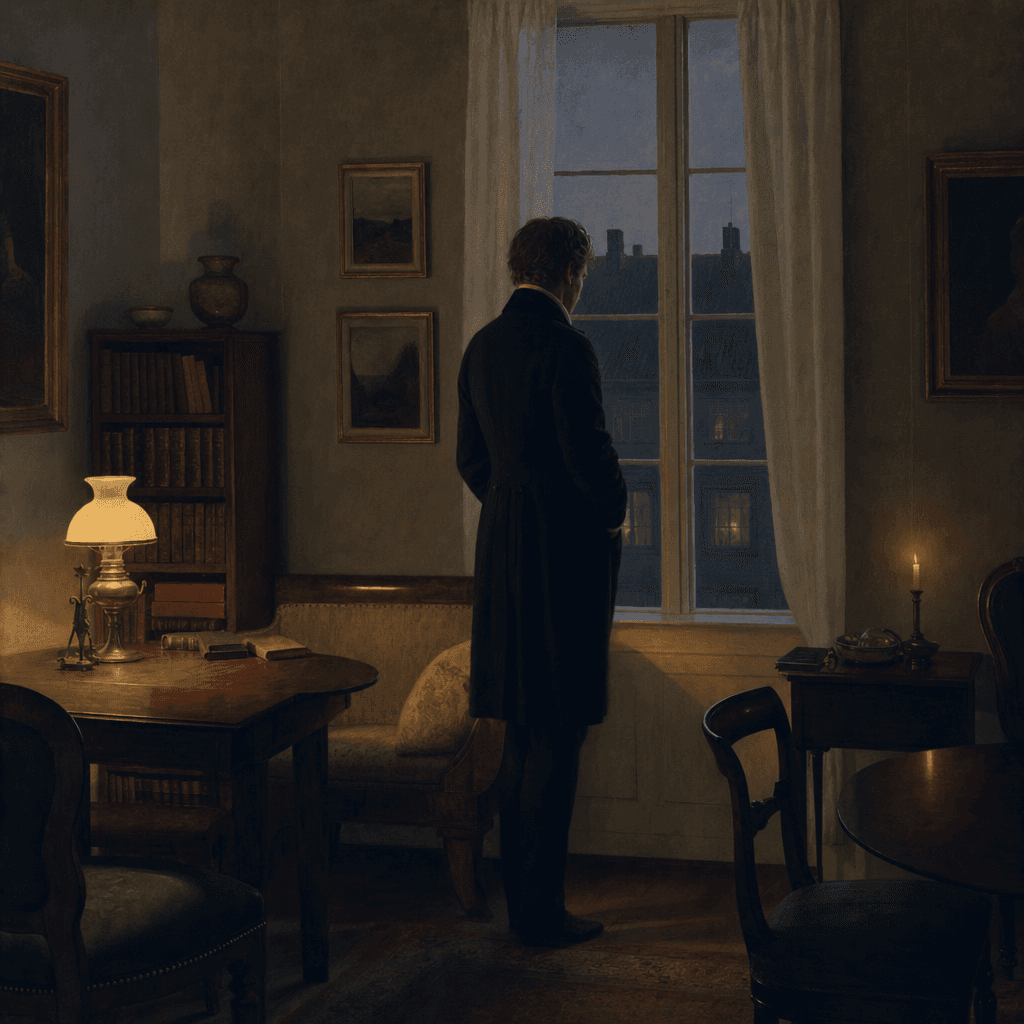
The demonic is characterised above all by what Kierkegaard calls "the closed" (det Indesluttede): a hermetic self-enclosure that refuses communication, contact, and the openness to the other that the good demands. The demonic individual may be enormously intelligent, self-aware, even self-critical — but they have turned their intelligence inward, into a closed system that feeds on itself. This closure is anxiety before the good: not anxiety that one will be harmed, but anxiety that genuinely opening to the good would dissolve the self-enclosure that has become one's identity.
The Sudden
A distinctive feature of the demonic is its relationship to time: it lives in what Kierkegaard calls "the sudden" (det Pludselige) — discontinuous bursts of action or reaction that refuse the continuity and narrative that genuine selfhood requires. The demonic person cannot commit to a course of action that unfolds through time and involves real relation to others; they erupt, retreat, erupt again, each moment disconnected from the others. This temporal fragmentation is both symptom and defence: it prevents the sustained openness that the good would require.
Communication and Healing
The demonic can only be broken open from without — by the irruption of the good through a crack in the closure. The New Testament accounts of demonic possession that Kierkegaard alludes to present the pattern: the demonic recognises Christ (the good) and reacts with terror precisely because the good threatens its closed world. The anxiety before the good is real anxiety: genuine openness to the other would require the demonic person to relinquish the enclosure that has become their mode of existence. This is experienced as annihilation rather than liberation — which is why the demonic clings so fiercely to its closure.
The analysis of the demonic appears in Chapter IV of The Concept of Anxiety and represents Kierkegaard's most original contribution to philosophical psychology. It was deeply influential on Karl Barth's theology, on R.D. Laing's psychiatry, and on a range of twentieth-century existential analyses of human self-enclosure.
Related Concepts