What "Exist" Means
Berkeley begins not with a proof but with an analysis of a word. When we say a table exists, what do we mean? That we see and feel it — or that, were we in the room, we should perceive it, or that some other spirit does. Strip away perception and the word "exists" has nothing left to mean.
The table I write on I say exists, that is, I see and feel it; and if I were out of my study I should say it existed—meaning thereby that if I was in my study I might perceive it, or that some other spirit actually does perceive it.
The Formula
From this the doctrine follows directly. The objects of sense are ideas; ideas exist only in a perceiving mind; therefore sensible things cannot exist unperceived.
Their ESSE is PERCIPI, nor is it possible they should have any existence out of the minds or thinking things which perceive them.
An Obvious Truth
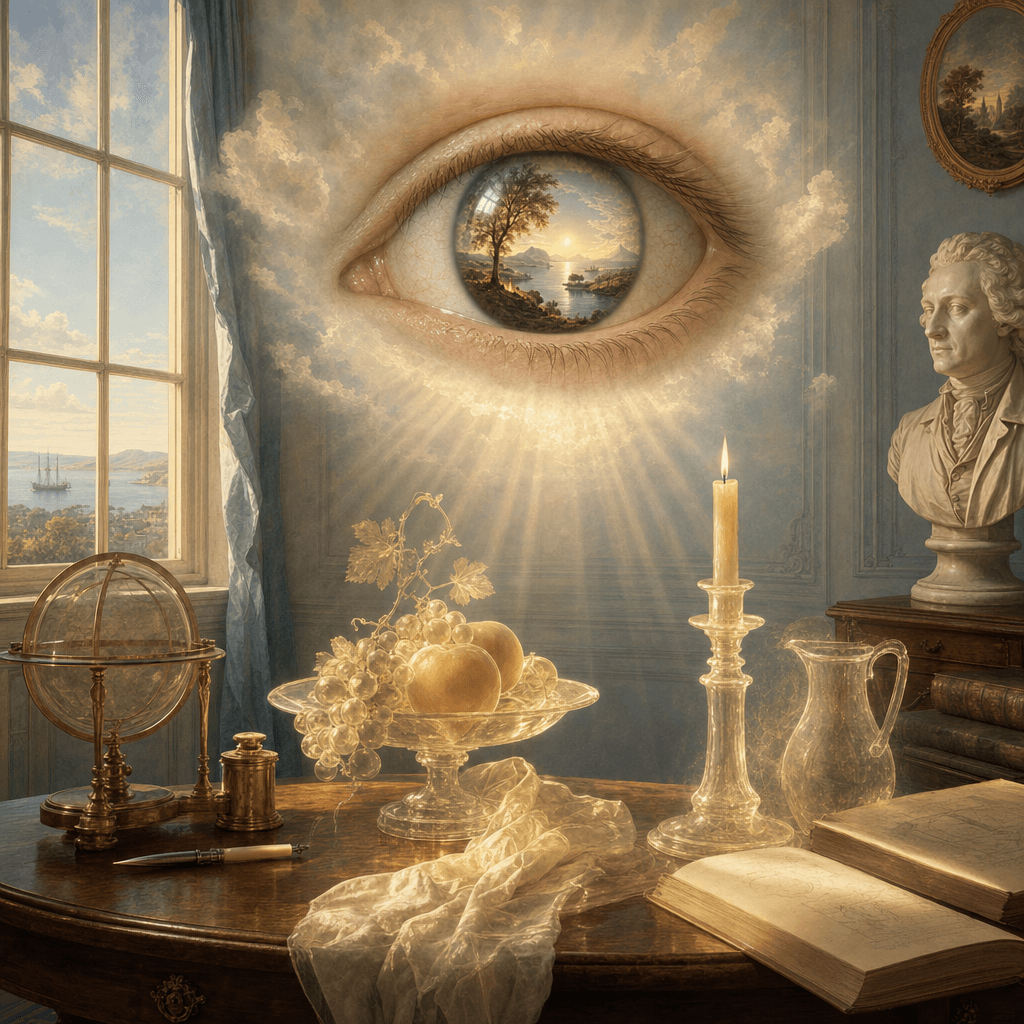
Berkeley presents the principle not as a paradox but as something a man need only open his eyes to see. The whole furniture of the earth and choir of heaven, he says, has no subsistence without a mind. What looks at first like the denial of the world is meant as its defence: the things we perceive are exactly as real as they seem — they are simply mental through and through.
The doctrine is stated in the opening sections of Of the Principles of Human Knowledge (1710).
Related Concepts